Qalibaf appointment elevates Iran–China coordination to highest political level
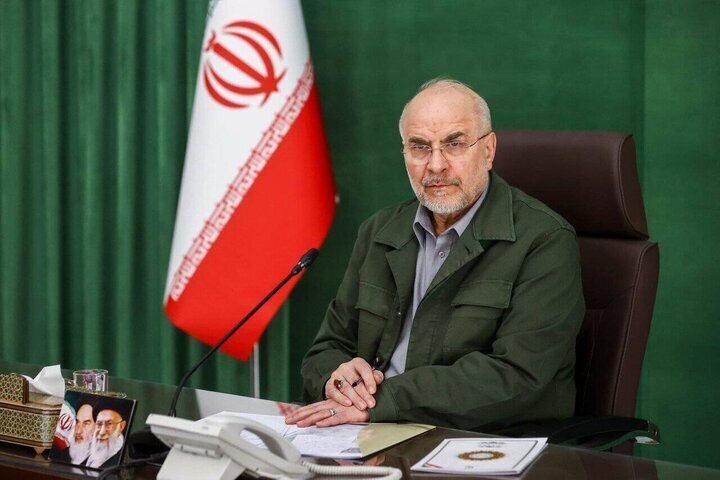
TEHRAN - The appointment of Parliament Speaker Mohammad Baqer Qalibaf as Iran’s special representative for China affairs elevates bilateral coordination to the highest political level, underscoring Beijing’s central role in Tehran’s strategy amid shifting regional dynamics after the US–Israeli war.
Qalibaf took on the role on Sunday following a proposal by President Masoud Pezeshkian and its approval by the Leader of the Islamic Revolution, Ayatollah Seyyed Mojtaba Khamenei, according to Tasnim news agency. Tasnim said Qalibaf would “coordinate various sectors of relations between Iran and China.”
Before this, the late Secretary of Iran’s Supreme National Security Council, Ali Larijani, had acted as the Leader’s special representative for China affairs. Larijani was assassinated in a US–Israeli attack on March 17.
Iran’s current ambassador to China, Abdolreza Rahmani Fazli, also serves as the president’s representative for China affairs.
Since the start of the US–Israel war on February 28, China has taken a clear and firm diplomatic position, condemning the strikes as a violation of international law and Iran’s sovereignty. Beijing has repeatedly called for an immediate ceasefire and an end to aggression, stressing respect for territorial integrity. Chinese Foreign Minister Wang Yi has held multiple urgent phone calls with Iranian Foreign Minister Abbas Araghchi, reaffirming China’s support for Iran.
Earlier this month, Araghchi made an official visit to China and supported President Xi Jinping’s four-point peace plan for the Middle East.
Following Araghchi’s China trip, President Donald Trump held talks with his Chinese counterpart in Beijing during his three-day visit to the East Asian nation. But he failed to push China to change its policy toward Iran or take a position in favor of the US.
“China’s position on the Iran situation is very clear. The conflict has inflicted severe losses on the people in Iran and other regional countries. Finding an early way to resolve the situation is in the interest of not only the US and Iran, but also regional countries and the rest of the world,” a Chinese Foreign Ministry statement said while Trump was in Beijing.
An April 8 ceasefire between Iran and the US, following 39 days of war, has failed to permanently end the conflict due to what Tehran calls Washington’s excessive demands. Thousands of Iranian people lost their lives in the joint US-Israeli strikes. In response, Iran carried out 100 waves of military operations against Israel and American bases in the Persian Gulf region.
Leave a Comment